AI in Early Diagnosis: Hitachi & Fujifilm Models
Healthcare & Senior Care Technology Training Program In-Person Open

AI in Early Diagnosis: Hitachi & Fujifilm Models

Japanese AI systems now detect cancers and chronic diseases earlier than human specialists alone. Learn from Hitachi and Fujifilm in Tokyo and build an AI diagnostic roadmap for your hospital.

Tokyo, Japan
5 days 35 hrs Tokyo, Japan ar / 15 seats

Overview

Hitachi and Fujifilm have deployed AI diagnostic systems that match or exceed radiologists in detecting early-stage cancers in CT, MRI, and endoscopy. These systems are not replacing doctors; they are becoming essential clinical partners that flag suspicious lesions, reduce missed diagnoses, and cut reading time. This programme examines their training datasets, validation protocols, clinical integration models, and Japan PMDA regulatory pathway for AI-based medical devices. Participants learn the governance and infrastructure needed to deploy AI diagnostics safely and effectively.

Program Objectives

  • Understand AI diagnostic technologies used by Hitachi and Fujifilm in cancer and chronic disease detection.
  • Evaluate clinical validation, safety, and regulatory approval processes for AI medical devices under PMDA.
  • Design an AI diagnostic adoption roadmap for a hospital or national health system.
  • Develop protocols for clinician-AI collaboration and patient trust.

Requirements

  • Hospital directors, radiologists, health IT managers, Ministry of Health AI policy officers, and clinical engineers interested in deploying AI diagnostics.

Why This Program?

AI Sees What Human Eyes Miss. Japan Proved It. Learn in Tokyo.

Five days in Tokyo with Hitachi and Fujifilm, designing an AI diagnostic adoption roadmap for your hospital.

Why this program
AI diagnostics are moving from pilot to standard of care. The challenge is not the algorithm; it is governance, validation, and clinician trust. This programme addresses all three using real Japanese case studies.
Why Japan
Japan has the highest density of PMDA-approved AI medical devices and the deepest experience integrating them into clinical workflows. Hitachi and Fujifilm are global leaders in medical imaging AI.
Experience Summary
Five days in Tokyo: AI landscape, Hitachi imaging platform, Fujifilm CAD-EYE demonstration, regulatory pathway, and hospital roadmap design.

Program Value

See Earlier
Japanese AI systems detect cancers and chronic diseases earlier than human specialists alone, reducing missed diagnoses.
PMDA Pathway
Learn the regulatory approval and post-market surveillance model for AI medical devices in Japan.
Clinician-AI Collaboration
Design protocols that make AI a trusted assistant rather than a threat to radiologists and physicians.
Hospital Roadmap
Leave with a ready-to-present AI diagnostic adoption roadmap for your hospital or health system.

Learning Journey

Before Program
AI Readiness Assessment
Participants audit their hospital imaging volume, IT infrastructure, and regulatory environment for AI diagnostic deployment.
During Program
Tokyo AI Diagnostics Immersion
Five days in Tokyo: Hitachi and Fujifilm demonstrations, regulatory pathway, and Day 5 roadmap design.
After Program
Roadmap Submission
Participants submit their AI diagnostic readiness report and adoption roadmap within 60 days. Debrief at Day 90.

Nomination Eligibility

This programme is designed for professionals nominated by their organisations to undergo specialised training in Japan. Nominees should have organisational sponsorship and a clear mandate to apply the learnings upon return.

Why Train in Japan

Japan is the birthplace of the methodologies taught in this programme. Training in Japan provides direct exposure to the original practices, site visits to world-class facilities, and interaction with Japanese experts who pioneered these approaches — an experience impossible to replicate in a local classroom.

Why Train Overseas

Overseas training in Japan offers immersive access to the source of these management and operational philosophies. Participants gain cultural context, real-world observation, and networking opportunities with Japanese organisations that cannot be delivered through domestic or online alternatives.

Field Visits Note

Field visits are subject to host organisation availability and may be substituted with alternative sites of equivalent educational value without prior notice.

Certificate Statement

NIHON GATE Certificate is awarded upon successful completion of all programme days, participation in all activities, and delivery of the final project or presentation as required.

How to Use This File for Nomination

1 Download this Program File for Corporate Approval.
2 Review the programme details, objectives, and outcomes with your supervisor.
3 Submit the file to your HR or training department for nomination approval.
4 Upon approval, complete your registration through the NIHON GATE portal.
5 Receive confirmation and pre-programme materials within 48 hours.
$4,200
Registration Fee
Register Now
Venue Hitachi Global HQ — AI Healthcare Briefing Center
Address 6-6 Marunouchi 1-chome, Chiyoda-ku, Tokyo 100-8280, Japan
View on Map Download Brochure Download Program File for Employer Approval
Limited to 15 participants for direct demonstrations and dialogue with Hitachi and Fujifilm engineers.
Discover More

Suggested Programs

Underground Sewage Systems: Kasukabe Project & Urban Flood Management Infrastructure & Engineering Open

Underground Sewage Systems: Kasukabe Project & Urban Flood Management

Visit the Metropolitan Outer Underground Discharge Channel in Kasukabe — the world largest flood-control tunnel — and study how Tokyo manages urban flooding through invisible mega-infrastructure.
5 days
35h
Tokyo
Arabic
In-person
Price $3,900
Details
Shu-Ha-Ri: Japanese Competency Development from Imitation to Innovation Human Development & Education Open

Shu-Ha-Ri: Japanese Competency Development from Imitation to Innovation

The Japanese three-stage skill acquisition model — follow the rule completely (Shu), break it after mastery (Ha), then transcend it to innovate your own method (Ri).
5 days
35h
Tokyo
Arabic
In-person
Price $3,500
Details
Poka-Yoke: Error-Proofing for Government & Service Sectors Quality & Operations Open

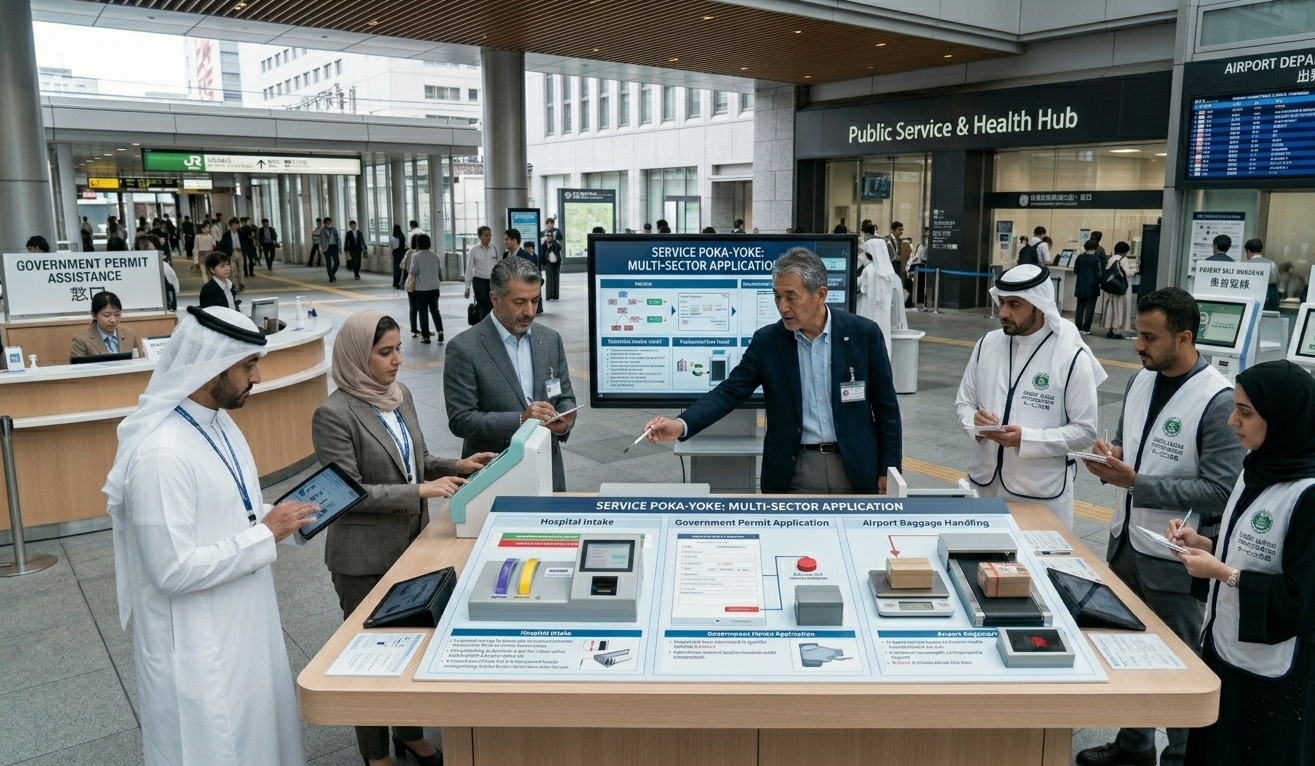
Poka-Yoke: Error-Proofing for Government & Service Sectors

Take Japan's most powerful error-prevention tool beyond the factory floor and apply it to government services, hospitals, airports, and digital workflows — eliminating human error by design, not discipline.
5 days
35h
Tokyo
Arabic
In-person
Price $3,500
Details
Japanese Vertical Farming: Intensive Production in Limited Spaces Smart Agriculture & Food Security Open

Japanese Vertical Farming: Intensive Production in Limited Spaces

Japan grows vegetables in climate-controlled factories using 99% less water than open-field farming. Visit Chiba to learn the plant-factory system and design a desert-farming pilot for the Gulf.
5 days
35h
Chiba
Arabic
In-person
Price $3,500
Details
Monozukuri: Craftsmanship Philosophy & Industrial Innovation Strategy Quality & Operations Open

Monozukuri: Craftsmanship Philosophy & Industrial Innovation Strategy

Discover the national philosophy that made Japan the world's undisputed quality benchmark — Monozukuri, the art of making things with precision, pride, and purpose — and translate it into a durable competitive advantage for your organisation.
5 days
35h
Kyoto
Arabic
In-person
Price $4,000
Details
Ho-Ren-So: Japanese Corporate Communication & Crisis Prevention Management & Leadership Open

Ho-Ren-So: Japanese Corporate Communication & Crisis Prevention

Build an organisation where bad news travels up immediately, decisions are never a surprise, and information crises become structurally impossible — using Japan's timeless Ho-Ren-So communication discipline.

5 days
35h
Tokyo
Arabic
In-person
Price $3,200
Details
Looking for a Specialized Japanese Program? Request a Custom Program