
Shinkansen: Precision & Safety Engineering in the Fastest Rail Lines
Not just the train — the managerial, engineering, and operational system that keeps the Shinkansen arriving within 36 seconds over six decades with zero passenger fatalities from operations.
Overview
Program Objectives
- Understand the integrated safety and precision culture of the Shinkansen system.
- Analyse the maintenance, crew, and operational standards that deliver zero-defect performance.
- Apply Shinkansen-inspired safety management principles to other transport systems.
Requirements
- Rail and metro engineers, transport authority officials, airport operations managers, infrastructure regulators, and senior safety managers responsible for high-reliability operations.
Why This Program?
10 Billion Passengers. 36-Second Delays. Zero Operational Fatalities. See How in Tokyo.
Five days with JR East engineers learning the system behind the world most reliable high-speed rail.
Every rail network promises speed and safety. The Shinkansen has delivered both for six decades. This programme goes beyond the train to the maintenance culture, crew training, control systems, and continuous improvement that make it possible.
Japan has operated high-speed rail since 1964 and has developed the deepest institutional expertise in precision maintenance, punctuality protocols, and safety culture.
Five days in Tokyo: Shinkansen safety culture, depot visit, control centre, driver simulators, ride experience, and Day 5 improvement plan.
Program Value
Learning Journey
Nomination Eligibility
Why Train in Japan
Why Train Overseas
Field Visits Note
Certificate Statement
How to Use This File for Nomination
Suggested Programs
 Quality & Operations
Open
Quality & Operations
Open
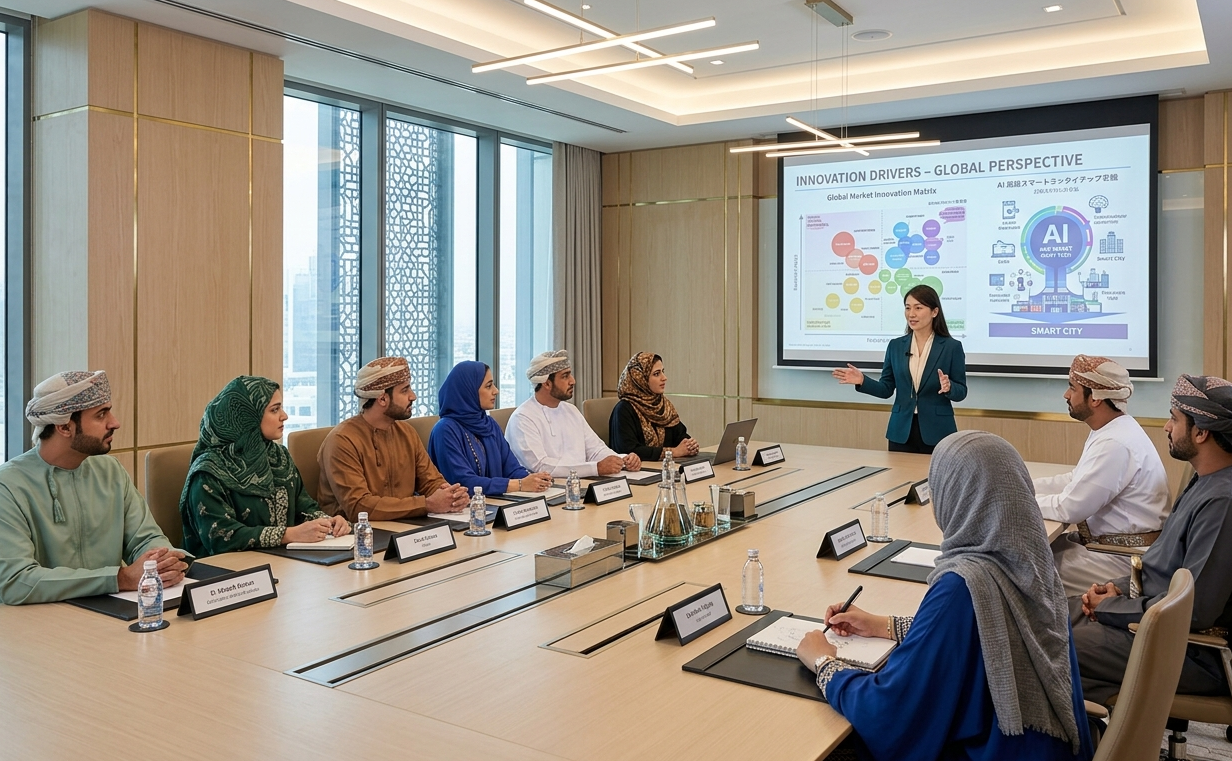
Poka-Yoke: Error-Proofing for Government & Service Sectors
Take Japan's most powerful error-prevention tool beyond the factory floor and apply it to government services, hospitals, airports, and digital workflows — eliminating human error by design, not discipline.
 Human Development & Education
Open
Human Development & Education
Open
Kata for Leadership: Daily Practice of Scientific Thinking in Problem-Solving
The Coaching Kata daily routine as a systematic methodology for developing scientific thinking in managers — a 10-minute daily leadership habit that fundamentally changes management and problem-solving.
 Environment & Energy
Open
Environment & Energy
Open
Kitakyushu: From Pollution City to Global Sustainability Capital
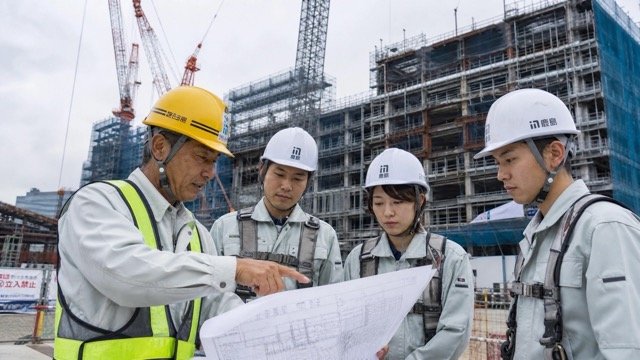
Kitakyushu journey from Japan most polluted city in the 1960s to a UN model for environmental transformation — with field visits to sustainability infrastructure and recycling plants.
 Environment & Energy
Open
Environment & Energy
Open
Japanese National Hydrogen Strategy & Gulf Partnership Opportunities
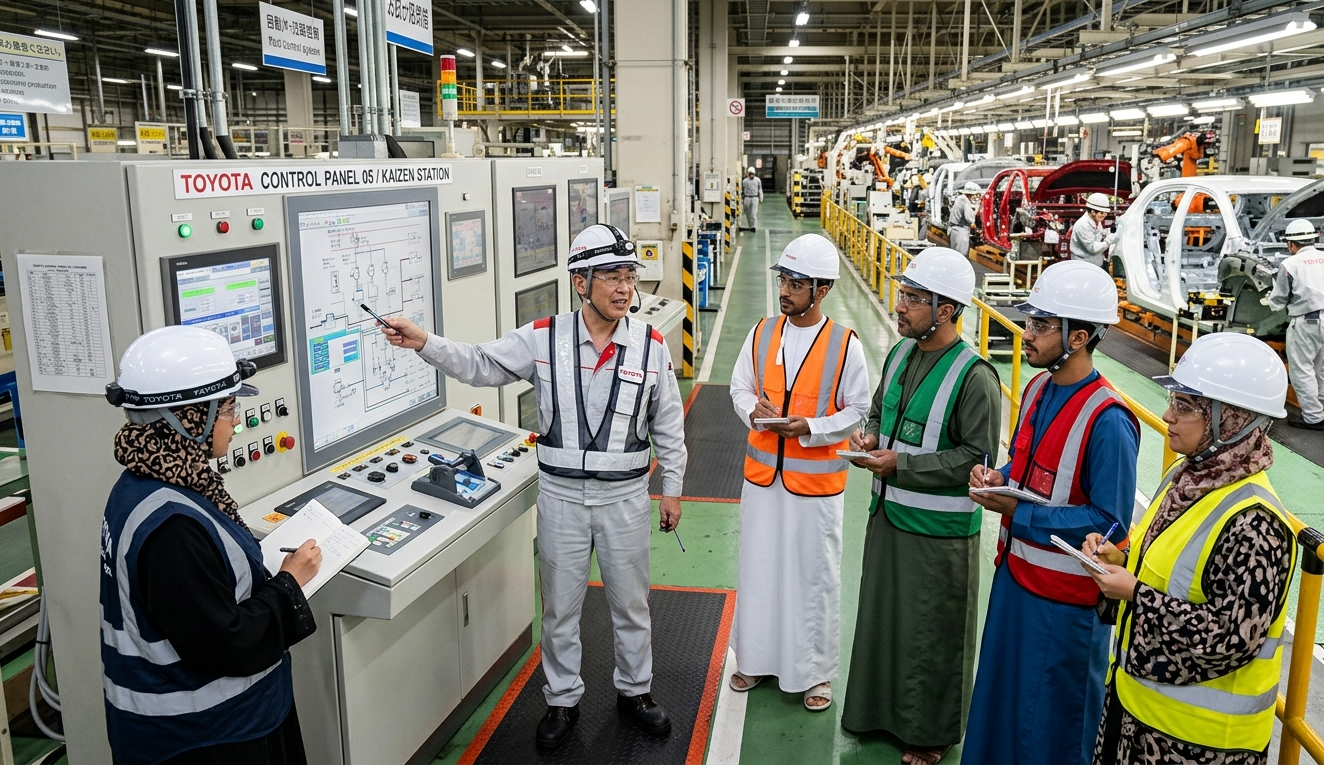
Japan is a global leader in the hydrogen economy with direct strategic interest in Gulf partnerships to import green hydrogen and clean ammonia — this programme opens real strategic cooperation doors.
 Quality & Operations
Open
Quality & Operations
Open
5S in Government: From Factory to Office & Public Service
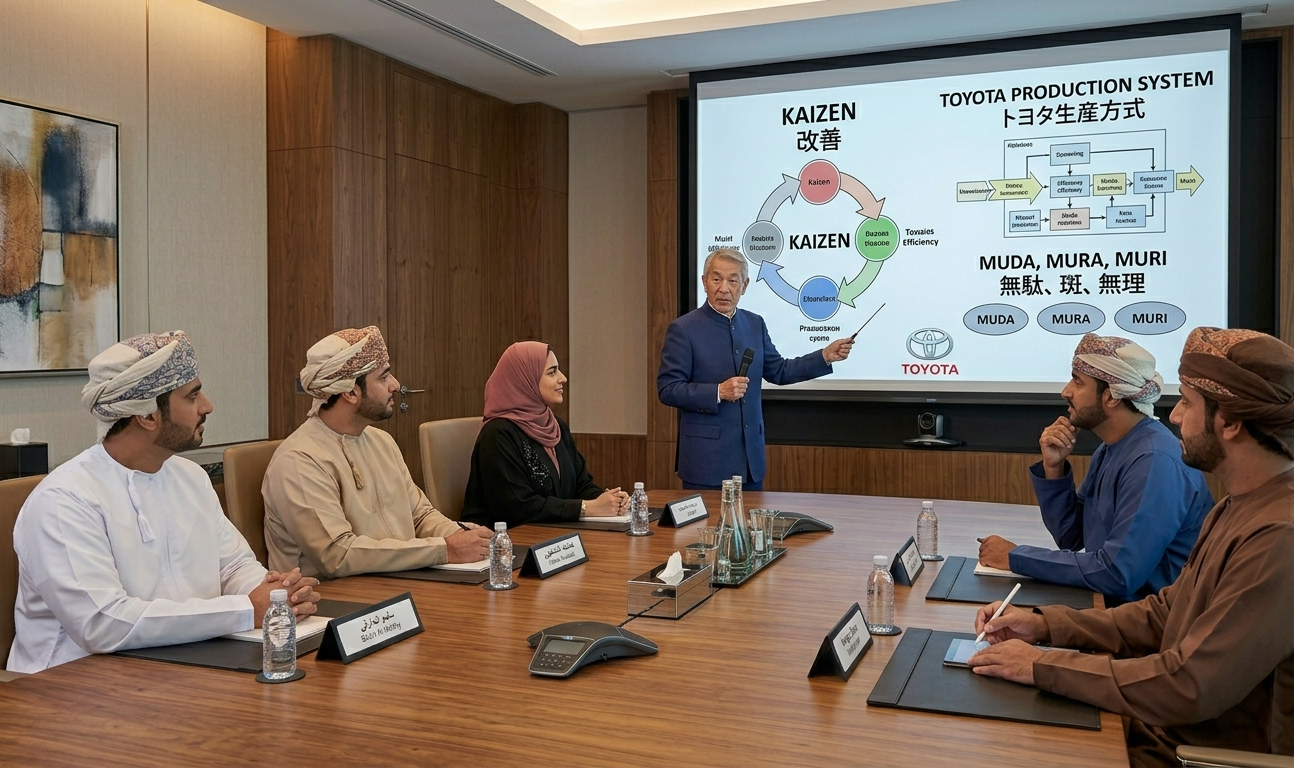
Take Japan's most proven workplace discipline — 5S — out of the factory and into government ministries, hospitals, and public offices. Leave with a completed 5S audit, a structured implementation plan, and the skills to sustain it independently.
 Quality & Operations
Open
Quality & Operations
Open
Jidoka in the Automation Age: AI with a Japanese Human-Centred Spirit
Master Japan's answer to the AI age: Jidoka — the principle that automation must detect, stop, and alert, keeping human judgment permanently at the centre of every intelligent system.