
Harvest Robots & Automated Agriculture: Japan Response to Aging Farmers
Smart Agriculture & Food Security Study Visit In-Person Open

Harvest Robots & Automated Agriculture: Japan Response to Aging Farmers

Japan average farmer is over 67. The country is automating agriculture to survive. Visit Nagoya to see self-driving tractors, strawberry robots, and harvest arms — then design your own agri-automation plan.

Nagoya, Japan
5 days 35 hrs Nagoya, Japan ar / 15 seats

Overview

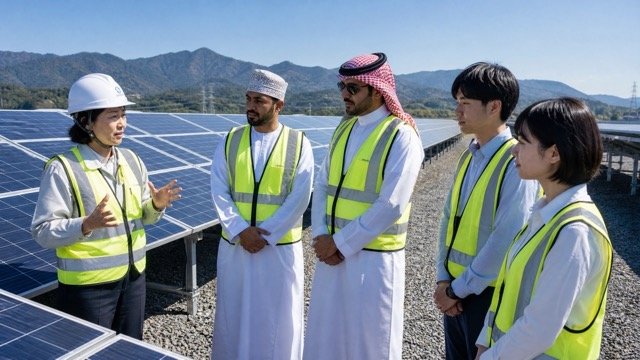
Japan average farmer is now over 67 years old, and rural labour is shrinking. Japanese agriculture has responded by deploying self-driving tractors, autonomous rice transplanters, strawberry-harvesting robots, lettuce-picking arms, and GNSS-guided spray drones. These are not prototypes — they are working in fields today. This programme visits commercial farms and robotics facilities in Nagoya and Aichi, meets engineers and farmers, and guides participants to design an agricultural automation adoption plan for their own crop, climate, and labour context.

Program Objectives

  • Survey the landscape of commercially deployed agricultural robots and autonomous machinery in Japan.
  • Evaluate the economics, labour savings, and technical requirements of automation for different crop types.
  • Design an agricultural automation adoption plan for a specific crop and farm context.
  • Assess the feasibility of transferring Japanese agri-robotics to Gulf and Arab agricultural investments.

Requirements

  • Agricultural engineers, agri-investment managers, food security planners, technology ministry officials, and farm managers evaluating automation.

Why This Program?

Japan Farmers Are 67+. Their Robots Are Working. See Them in Nagoya.

Five days in Nagoya and Aichi designing an agricultural automation plan for your farm or investment.

Why this program
Labour shortages are global, and agriculture is the hardest hit. Japan has the most commercial experience with farm automation. This programme gives you direct access to the machines, the farms, and the engineers who made them work.
Why Japan
Japan faces the most severe aging farmer demographic in the world and has commercially deployed the widest range of agricultural robots, from rice to strawberries to drones.
Experience Summary
Five days in Nagoya: automation landscape, farm visits, robotics facility, business case, and Day 5 adoption plan.

Program Value

Deployed Robotics
See working robots for rice, strawberries, and vegetables rather than laboratory prototypes.
Labour Economics
Analyse the payback, labour savings, and operating cost impact of agri-automation.
Engineering Access
Meet the engineers and maintenance teams behind the robots and ask practical questions.
Adoption Roadmap
Leave with a crop-specific automation plan including equipment, costs, and a rollout timeline.

Learning Journey

Before Program
Farm Automation Baseline
Participants document labour costs, crop cycles, and bottlenecks for their target crop or region.
During Program
Nagoya Agri-Robotics Immersion
Five days in Nagoya: farm visits, robotics facility, business case, and Day 5 adoption plan.
After Program
Adoption Plan Submission
Participants submit an agri-automation feasibility report and adoption plan within 60 days. Debrief at Day 90.

Nomination Eligibility

This programme is designed for professionals nominated by their organisations to undergo specialised training in Japan. Nominees should have organisational sponsorship and a clear mandate to apply the learnings upon return.

Why Train in Japan

Japan is the birthplace of the methodologies taught in this programme. Training in Japan provides direct exposure to the original practices, site visits to world-class facilities, and interaction with Japanese experts who pioneered these approaches — an experience impossible to replicate in a local classroom.

Why Train Overseas

Overseas training in Japan offers immersive access to the source of these management and operational philosophies. Participants gain cultural context, real-world observation, and networking opportunities with Japanese organisations that cannot be delivered through domestic or online alternatives.

Field Visits Note

Field visits are subject to host organisation availability and may be substituted with alternative sites of equivalent educational value without prior notice.

Certificate Statement

NIHON GATE Certificate is awarded upon successful completion of all programme days, participation in all activities, and delivery of the final project or presentation as required.

How to Use This File for Nomination

1 Download this Program File for Corporate Approval.
2 Review the programme details, objectives, and outcomes with your supervisor.
3 Submit the file to your HR or training department for nomination approval.
4 Upon approval, complete your registration through the NIHON GATE portal.
5 Receive confirmation and pre-programme materials within 48 hours.
$3,600
Registration Fee
Register Now
Venue Aichi Prefecture Agriculture Center — Nagoya Robotics Field
Address 2-13 Sannomaru 2-chome, Naka-ku, Nagoya 460-0001, Japan
View on Map Download Brochure Download Program File for Employer Approval
Limited to 15 participants for access to operating farms and robotics test fields.
Discover More

Suggested Programs

Anti-Seismic Engineering: Base Isolation & Resilient Construction Disaster Management & Resilience Open

Anti-Seismic Engineering: Base Isolation & Resilient Construction

Learn from the nation that perfected earthquake-resistant construction — Japan's base isolation systems, tuned mass dampers, and seismic standards that kept Tokyo's skyscrapers standing through thousands of earthquakes.

5 days
35h
Tokyo
Arabic
In-person
Price $4,500
Details
Poka-Yoke: Error-Proofing for Government & Service Sectors Quality & Operations Open

Poka-Yoke: Error-Proofing for Government & Service Sectors

Take Japan's most powerful error-prevention tool beyond the factory floor and apply it to government services, hospitals, airports, and digital workflows — eliminating human error by design, not discipline.

5 days
35h
Tokyo
Arabic
In-person
Price $3,500
Details
Japanese Future Cities: Smart City from Woven City to Kashiwa-no-ha Infrastructure & Engineering Open

Japanese Future Cities: Smart City from Woven City to Kashiwa-no-ha

Japan experience building smart cities from scratch — Woven City built by Toyota as a self-contained integrated city model, with direct lessons for Gulf mega-city projects.

5 days
35h
Toyota City
Arabic
In-person
Price $4,200
Details
Nemawashi & Ringi: Consensus Building & Group Decision-Making Management & Leadership Open

Nemawashi & Ringi: Consensus Building & Group Decision-Making

Master the invisible backbone of Japanese corporate decision-making — the Nemawashi consensus-preparation system and the Ringi formal approval process — to eliminate conflict and accelerate high-stakes decisions.

5 days
35h
Tokyo
Arabic
In-person
Price $3,800
Details
5S in Government: From Factory to Office & Public Service Quality & Operations Open

5S in Government: From Factory to Office & Public Service

Take Japan's most proven workplace discipline — 5S — out of the factory and into government ministries, hospitals, and public offices. Leave with a completed 5S audit, a structured implementation plan, and the skills to sustain it independently.

5 days
35h
Tokyo
Arabic
In-person
Price $2,800
Details
Tunnel Engineering in Seismic Environments & Soft Soil Infrastructure & Engineering Open

Tunnel Engineering in Seismic Environments & Soft Soil

Japan unique technologies for tunnelling in soft soil and high-seismic environments — engineering solutions unmatched anywhere else.

5 days
35h
Tokyo
Arabic
In-person
Price $4,000
Details
Looking for a Specialized Japanese Program? Request a Custom Program