
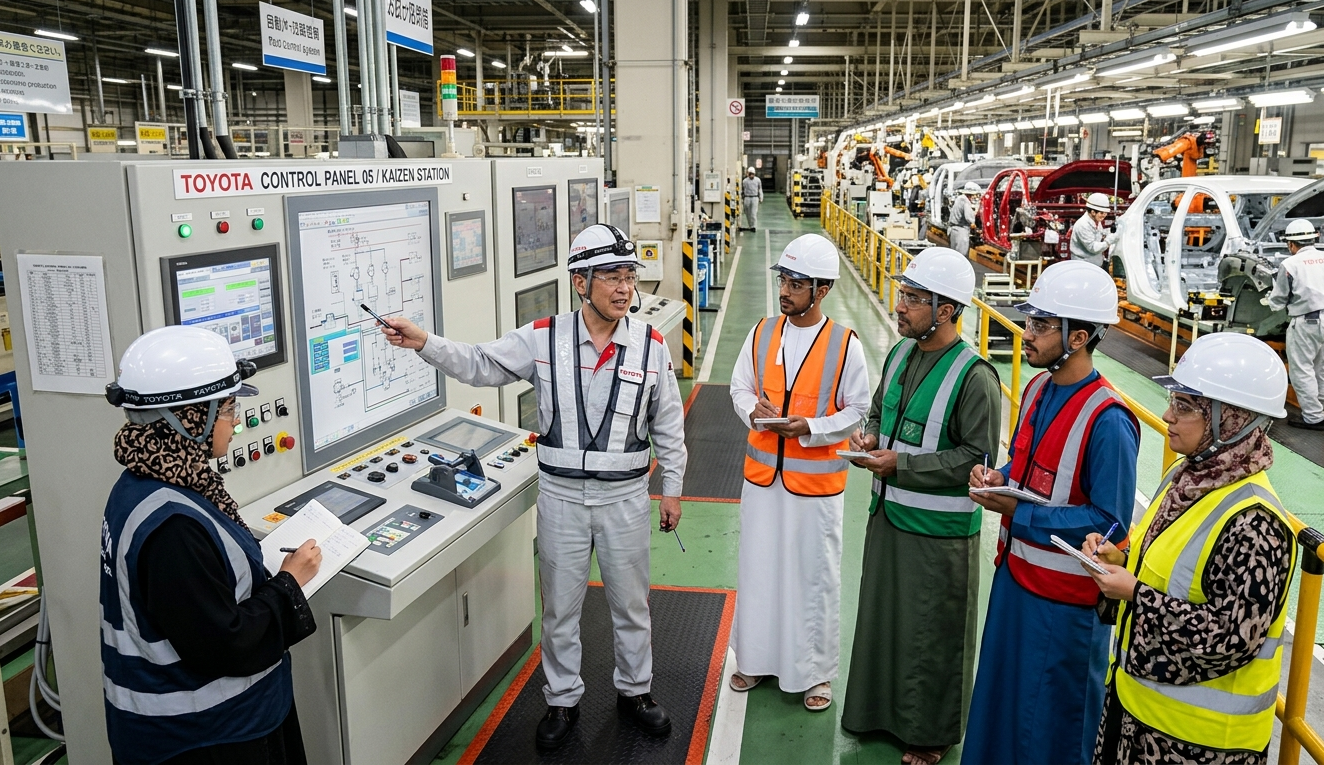
Nemawashi & Ringi: Consensus Building & Group Decision-Making
Master the invisible backbone of Japanese corporate decision-making — the Nemawashi consensus-preparation system and the Ringi formal approval process — to eliminate conflict and accelerate high-stakes decisions.
Overview
Program Objectives
- Understand the origins and philosophy of Nemawashi and Ringi in Japanese corporate culture.
- Map decision stakeholders and plan structured pre-consultation sequences.
- Draft a legally and culturally sound Ringi document from scratch.
- Diagnose and resolve approval blockages in hierarchical organisations.
Requirements
- At least 2 years in a management, supervisory, or project coordination role.
- Experience in multi-stakeholder environments is beneficial.
- No prior knowledge of Japanese management is required.
Why This Program?
Stop Fighting for Approvals — Start Getting Them Automatically
The Japanese secret that makes every decision land before the meeting even starts.
Studies of Japanese vs. Western decision-making consistently show that Japanese organisations take longer to decide but implement significantly faster — because by the time a decision is official, everyone has already committed. Nemawashi and Ringi are the engineering behind this phenomenon. This programme gives you both systems in full, with tools you can deploy on your very next decision.
Nemawashi and Ringi are uniquely Japanese — they cannot be fully understood through translated descriptions. Experiencing them in Tokyo, within the cultural and organisational context that created them, provides a depth of understanding no remote training can replicate.
Five days in Tokyo mastering Japan's most powerful decision-making tools: stakeholder mapping, live Nemawashi simulations, Ringi document drafting, and a full end-to-end decision simulation on Day 5.
Program Value
Learning Journey
Nomination Eligibility
Why Train in Japan
Why Train Overseas
Field Visits Note
Certificate Statement
How to Use This File for Nomination
Suggested Programs
 Healthcare & Senior Care Technology
Open
Kaigo: Japanese Elderly Care System & Applications in Gulf Communities
Japan became the world first super-aged society and built the Kaigo system to make ageing dignified, affordable, and community-based. Learn it in Tokyo and adapt it to Gulf communities.
 Infrastructure & Engineering
Open
Shinkansen: Precision & Safety Engineering in the Fastest Rail Lines
Not just the train — the managerial, engineering, and operational system that keeps the Shinkansen arriving within 36 seconds over six decades with zero passenger fatalities from operations.
 Management & Leadership
Open
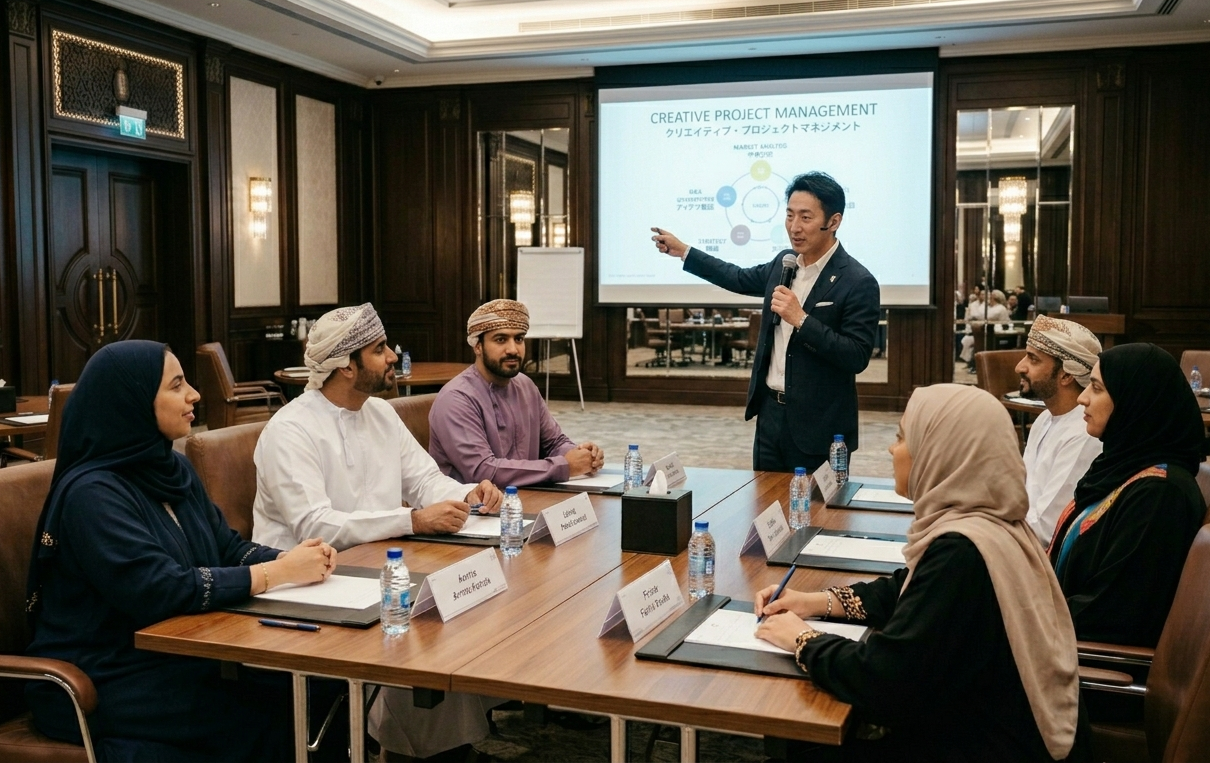
Toyota Way Leadership: The 14 Principles in Practice
A deep immersion in the 14 principles of the Toyota Way — long-term thinking, employee and supplier development, and Genchi Genbutsu — experienced directly at Toyota City headquarters.
 Human Development & Education
Open
Shu-Ha-Ri: Japanese Competency Development from Imitation to Innovation
The Japanese three-stage skill acquisition model — follow the rule completely (Shu), break it after mastery (Ha), then transcend it to innovate your own method (Ri).
 Trade & Industry
Open
Vertical Value Chains: Interlocking Industrial Networks & National Economy Lessons
Study the vertical Keiretsu as a model for building a nationally integrated industry with high local content and resilience to external disruptions — applied lessons for Gulf localisation policies.
 Innovation & Technology
Open
Japanese Incremental Innovation: Why Japan Makes the Best, Not the First
The philosophy that made Japan masters of incremental accumulated development — building on first inventions to produce the best through hundreds of systematic small iterations.