
Japanese Vertical Farming: Intensive Production in Limited Spaces
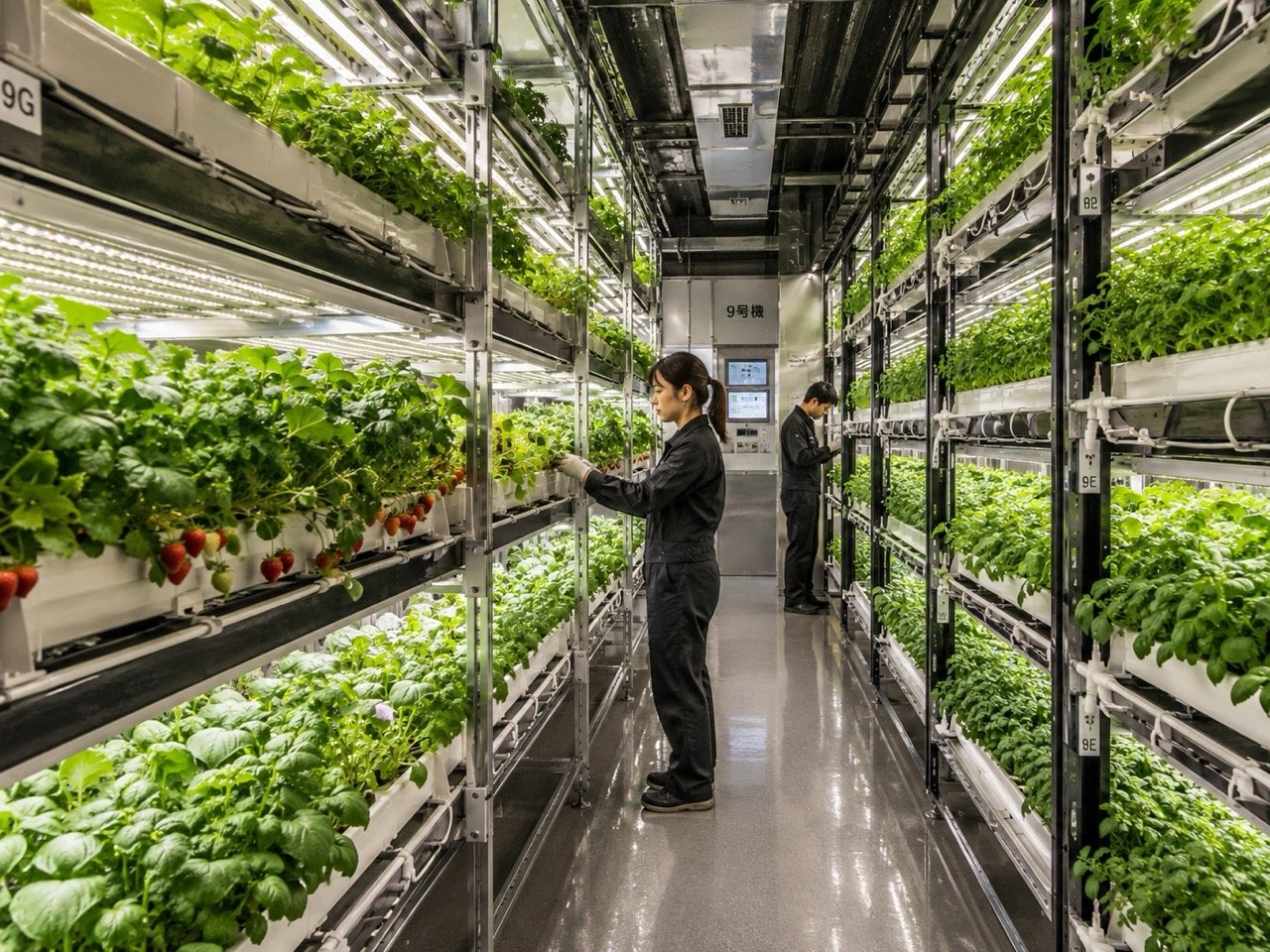
Japan grows vegetables in climate-controlled factories using 99% less water than open-field farming. Visit Chiba to learn the plant-factory system and design a desert-farming pilot for the Gulf.
Overview
Program Objectives
- Understand the technology stack of Japanese plant-factory systems: LED lighting, HVAC, hydroponics, nutrient control, and automation.
- Analyse the capital and operating economics of vertical farming for arid regions.
- Design a vertical farming pilot project for a Gulf context, including crop selection and business model.
- Evaluate the water, energy, and food-security benefits of plant-factory agriculture.
Requirements
- Agricultural engineers, food security officials, agri-tech investors, government R&D directors, and farm managers interested in protected agriculture.
Why This Program?
Grow 365 Days a Year with 99% Less Water. Japan Plant Factory Is the Model.
Five days in Chiba designing a vertical farming pilot for water-scarce Gulf regions.
Gulf food security depends on reducing imports. Vertical farming can produce fresh greens locally, but only if the technology, crop economics, and energy model are right. This programme gives you the only first-hand look at the Japanese system that has already solved those problems.
Japan has the highest concentration of commercial plant factories in the world and Chiba University is the leading research hub. Their systems are engineered for water efficiency and year-round production.
Five days in Chiba: plant factory landscape, Chiba University labs, commercial farm visits, economics, and pilot design.
Program Value
Learning Journey
Nomination Eligibility
Why Train in Japan
Why Train Overseas
Field Visits Note
Certificate Statement
How to Use This File for Nomination
Suggested Programs
 Disaster Management & Resilience
Open
Disaster Management & Resilience
Open
Bosai Culture: Building a Resilient Society from Family to Nation
Discover how Japan — a country facing 1,500+ earthquakes per year — built the world's most resilient society, not through technology alone but through a deeply embedded national culture of preparedness called Bosai.
 Healthcare & Senior Care Technology
Open
Healthcare & Senior Care Technology
Open
Kaizen in Hospitals: Continuous Improvement in Patient Pathways
Japanese hospitals cut waiting times by 60% and medication errors by 80% using Kaizen. Learn the TPS-based hospital improvement system in Tokyo and launch your own project.
 Environment & Energy
Open
Environment & Energy
Open
Kitakyushu: From Pollution City to Global Sustainability Capital
Kitakyushu journey from Japan most polluted city in the 1960s to a UN model for environmental transformation — with field visits to sustainability infrastructure and recycling plants.
 Smart Agriculture & Food Security
Open
Smart Agriculture & Food Security
Open
Harvest Robots & Automated Agriculture: Japan Response to Aging Farmers
Japan average farmer is over 67. The country is automating agriculture to survive. Visit Nagoya to see self-driving tractors, strawberry robots, and harvest arms — then design your own agri-automation plan.
 Healthcare & Senior Care Technology
Open
Healthcare & Senior Care Technology
Open
AI in Early Diagnosis: Hitachi & Fujifilm Models
Japanese AI systems now detect cancers and chronic diseases earlier than human specialists alone. Learn from Hitachi and Fujifilm in Tokyo and build an AI diagnostic roadmap for your hospital.
 Hospitality & Customer Experience
Open
Hospitality & Customer Experience
Open
Organisational Kintsugi: Post-Crisis Leadership & Rebuilding with Gold
The Kintsugi philosophy applied to leading organisations after crises and failure — cracks are not hidden but highlighted and treated to become part of the institutional maturity story.