
Shinrin-yoku: Forest Therapy & Employee Wellness Applications
Japanese forest bathing — a scientifically validated programme proven to lower cortisol, boost immunity, and improve focus — and how major Japanese companies integrate it in employee wellness programmes as an investment not a cost.
Overview
Program Objectives
- Understand the science behind Shinrin-yoku and its measurable health outcomes.
- Design a corporate forest therapy programme for employee wellness.
- Build a business case for Shinrin-yoku as a productivity and retention investment.
Requirements
- HR directors, occupational health managers, corporate wellness leads, and employee experience designers.
Why This Program?
Forest Bathing Is Not a Walk — It Is a Measurable Medical Intervention.
Five days in Kyoto: the science of Shinrin-yoku, guided forest therapy, and the corporate integration model used by NTT, Fujitsu, and Panasonic.
Gulf companies face burnout and retention challenges. Shinrin-yoku is proven to lower cortisol by 12.4% and boost NK cell activity — a wellness investment with measurable ROI.
Japan formalised forest therapy in 1982 with 50+ clinical studies and certified forest therapy guides — the only country with a government-backed forest therapy certification system.
Five days in Kyoto: forest therapy science, guided bamboo forest walks, corporate integration case studies, programme design, and wellness ROI framework.
Program Value
Learning Journey
Nomination Eligibility
Why Train in Japan
Why Train Overseas
Field Visits Note
Certificate Statement
How to Use This File for Nomination
Suggested Programs
 Management & Leadership
Open
Management & Leadership
Open
Organisational Ikigai: Building a Purpose-Driven Culture
Transform your organisation's retention and engagement crisis using Japan's most profound wellbeing philosophy — Ikigai — experienced in Okinawa, the world's longest-living community.
 Quality & Operations
Open
Quality & Operations
Open
Monozukuri: Craftsmanship Philosophy & Industrial Innovation Strategy
Discover the national philosophy that made Japan the world's undisputed quality benchmark — Monozukuri, the art of making things with precision, pride, and purpose — and translate it into a durable competitive advantage for your organisation.
 Quality & Operations
Open
Quality & Operations
Open
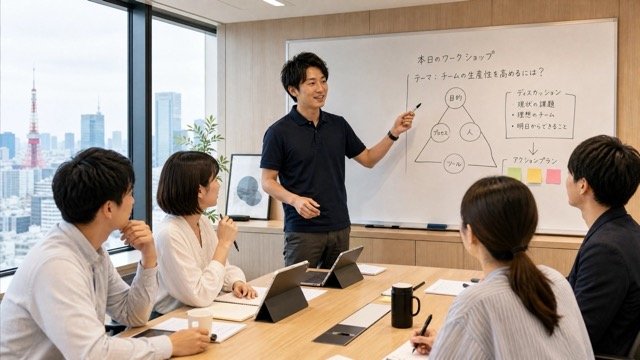
5S in Government: From Factory to Office & Public Service
Take Japan's most proven workplace discipline — 5S — out of the factory and into government ministries, hospitals, and public offices. Leave with a completed 5S audit, a structured implementation plan, and the skills to sustain it independently.
 Law & Governance
Open
Law & Governance
Open
Intellectual Property Law & Innovation: How Japan Protects Its Technical Edge
Japan patent and trade-secret protection system that enables companies to invest in R&D with confidence — lessons for Gulf business environments building a knowledge economy.
 Quality & Operations
Open
Quality & Operations
Open
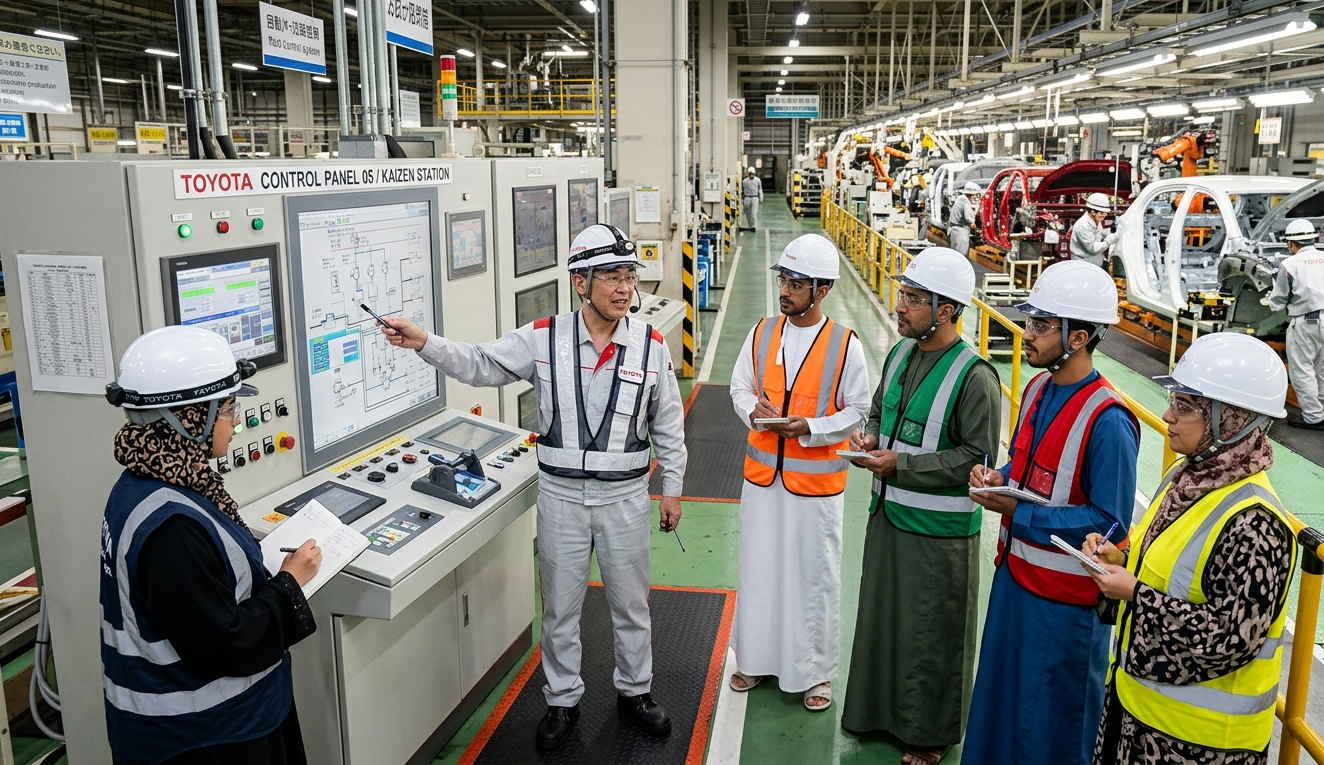
Digital Kanban: From Toyota Boards to Modern Project Management
Trace Kanban from its birth on Toyota's assembly lines in 1940s Nagoya to today's digital project management boards — and design a Kanban system for your own team at the source of the methodology.
 Management & Leadership
Open
Management & Leadership
Open
Nemawashi & Ringi: Consensus Building & Group Decision-Making
Master the invisible backbone of Japanese corporate decision-making — the Nemawashi consensus-preparation system and the Ringi formal approval process — to eliminate conflict and accelerate high-stakes decisions.