
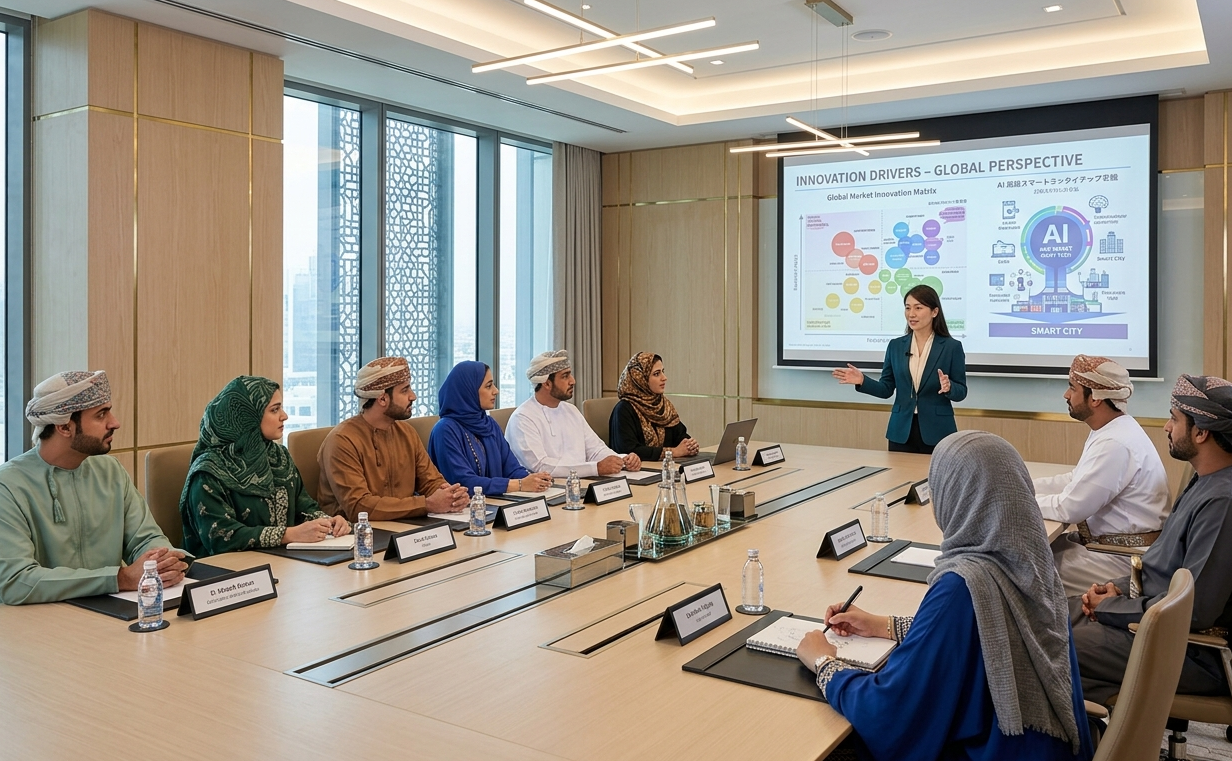
Poka-Yoke: Error-Proofing for Government & Service Sectors
Take Japan's most powerful error-prevention tool beyond the factory floor and apply it to government services, hospitals, airports, and digital workflows — eliminating human error by design, not discipline.
Overview
Program Objectives
- Understand the three Poka-Yoke mechanisms — prevention, detection, and correction — and choose the right one for each failure mode.
- Conduct a service process failure-mode analysis to identify error-prone steps.
- Design physical and digital Poka-Yoke solutions for non-manufacturing environments.
- Measure and document error reduction results to build the business case for error-proofing investment.
Requirements
- Professionals involved in service process design, quality assurance, operations management, or public-sector administration.
- No engineering background required — the programme is designed for service and government contexts.
Why This Program?
Stop Training People Not to Make Mistakes. Redesign So Mistakes Are Impossible.
Japan's most powerful quality tool — taken from the factory floor into government, healthcare, and aviation.
Human error costs governments and healthcare systems trillions annually. The traditional response — more training, stricter checklists — does not work. Poka-Yoke does, because it removes the human from the error equation entirely by redesigning the process. Japan has proven this in every sector from manufacturing to public transport to hospital dispensing. This programme teaches you how.
To understand Poka-Yoke in service contexts, you need to see it in action — in Tokyo's subway, in Japanese hospital dispensaries, in municipal offices. This programme provides that direct observational experience, making the principles visceral and immediately applicable.
Five days in Tokyo: Poka-Yoke principles and mechanisms, service failure-mode analysis, physical and digital solution design, live site visits to Japanese public-service facilities, and a Day 5 solution presentation.
Program Value
Learning Journey
Nomination Eligibility
Why Train in Japan
Why Train Overseas
Field Visits Note
Certificate Statement
How to Use This File for Nomination
Suggested Programs
 Disaster Management & Resilience
Open
Disaster Management & Resilience
Open
Japanese BCP Model: Businesses That Never Stopped Despite Disaster
Toyota restored production in 10 days after the 2011 earthquake. Nippon Steel in 14. Learn the Japanese BCP framework that turns disaster response into competitive advantage — and build one for your organisation.
 Healthcare & Senior Care Technology
Open
Healthcare & Senior Care Technology
Open
Kaizen in Hospitals: Continuous Improvement in Patient Pathways
Japanese hospitals cut waiting times by 60% and medication errors by 80% using Kaizen. Learn the TPS-based hospital improvement system in Tokyo and launch your own project.
 Management & Leadership
Open
Management & Leadership
Open
Nemawashi & Ringi: Consensus Building & Group Decision-Making
Master the invisible backbone of Japanese corporate decision-making — the Nemawashi consensus-preparation system and the Ringi formal approval process — to eliminate conflict and accelerate high-stakes decisions.
 Human Development & Education
Open
Human Development & Education
Open
Shu-Ha-Ri: Japanese Competency Development from Imitation to Innovation
The Japanese three-stage skill acquisition model — follow the rule completely (Shu), break it after mastery (Ha), then transcend it to innovate your own method (Ri).
 Innovation & Technology
Open
Innovation & Technology
Open
Gemba Leadership: Decisions from the Field, Not the Office
Genchi Genbutsu as a deep leadership methodology — how Japanese managers make decisions based on visible reality rather than reports, with field application in real Japanese facilities.
 Environment & Energy
Open
Environment & Energy
Open
Kitakyushu: From Pollution City to Global Sustainability Capital
Kitakyushu journey from Japan most polluted city in the 1960s to a UN model for environmental transformation — with field visits to sustainability infrastructure and recycling plants.