
Ho-Ren-So: Japanese Corporate Communication & Crisis Prevention
Build an organisation where bad news travels up immediately, decisions are never a surprise, and information crises become structurally impossible — using Japan's timeless Ho-Ren-So communication discipline.
Overview
Program Objectives
- Master the three pillars of Ho-Ren-So — Report, Notify, Consult — and the precise conditions for applying each.
- Draft concise, structured reporting templates calibrated for different seniority levels.
- Design and document an organisation-wide Ho-Ren-So protocol.
- Identify and eliminate the most common communication failure modes in hierarchical organisations.
Requirements
- No specific prerequisites. Suitable for all professional levels from team leaders to senior directors.
- Participants working in government, healthcare, or large matrix organisations will benefit most.
Why This Program?
The Japanese System That Makes Organisational Crises Structurally Impossible
Ho-Ren-So: three disciplines. Five days in Tokyo. A communication culture that protects your organisation forever.
Research on organisational failure consistently identifies communication breakdown as the primary cause — not strategy, not talent, not resources. Ho-Ren-So is Japan's structural solution to this universal problem. In organisations that implement it fully, information flows correctly at all times, problems surface early, and crises are prevented rather than managed.
Ho-Ren-So was born in Japanese corporate culture and is inseparable from its context. Experiencing it in Tokyo — visiting companies where it operates daily, speaking with Japanese managers who have lived it for decades — provides an authenticity and conviction that no translated programme can match.
Five days in Tokyo: Ho-Ren-So history and philosophy, Japanese corporate site visit, live reporting and notification exercises, protocol design workshops, and a complete organisational Ho-Ren-So system built and presented on Day 5.
Program Value
Learning Journey
Nomination Eligibility
Why Train in Japan
Why Train Overseas
Field Visits Note
Certificate Statement
How to Use This File for Nomination
Suggested Programs
 Management & Leadership
Open
Management & Leadership
Open
Toyota Way Leadership: The 14 Principles in Practice
A deep immersion in the 14 principles of the Toyota Way — long-term thinking, employee and supplier development, and Genchi Genbutsu — experienced directly at Toyota City headquarters.
 Innovation & Technology
Open
Innovation & Technology
Open
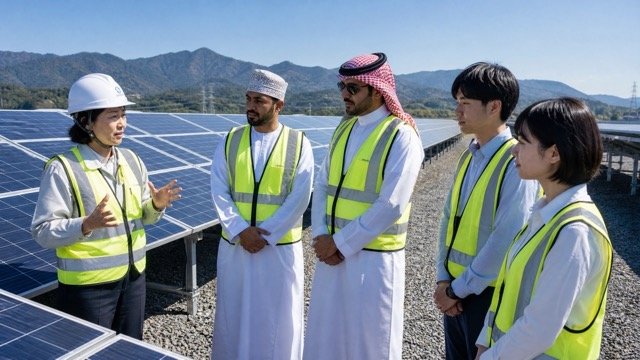
Japanese Incremental Innovation: Why Japan Makes the Best, Not the First
The philosophy that made Japan masters of incremental accumulated development — building on first inventions to produce the best through hundreds of systematic small iterations.
 Smart Agriculture & Food Security
Open
Smart Agriculture & Food Security
Open
Japanese Cold Chain Management: Zero Waste & Food Security
Japan wastes less food than almost any country. Learn the cold-chain, smart packaging, and traceability systems behind it — and design a national food-loss reduction plan.
 Disaster Management & Resilience
Open
Disaster Management & Resilience
Open
Japanese BCP Model: Businesses That Never Stopped Despite Disaster
Toyota restored production in 10 days after the 2011 earthquake. Nippon Steel in 14. Learn the Japanese BCP framework that turns disaster response into competitive advantage — and build one for your organisation.
 Healthcare & Senior Care Technology
Open
Healthcare & Senior Care Technology
Open
Kaigo: Japanese Elderly Care System & Applications in Gulf Communities
Japan became the world first super-aged society and built the Kaigo system to make ageing dignified, affordable, and community-based. Learn it in Tokyo and adapt it to Gulf communities.
 Disaster Management & Resilience
Open
Disaster Management & Resilience
Open
Japanese Early Warning UrEDAS & Preventive Technologies
Seconds before an earthquake, Japan's UrEDAS system detects the first seismic wave and automatically stops trains, elevators, and industrial lines — saving lives and infrastructure worth billions. Learn exactly how.