Bosai Culture: Building a Resilient Society from Family to Nation
Disaster Management & Resilience Study Visit In-Person Open

Bosai Culture: Building a Resilient Society from Family to Nation

Discover how Japan — a country facing 1,500+ earthquakes per year — built the world's most resilient society, not through technology alone but through a deeply embedded national culture of preparedness called Bosai.

Sendai, Japan
5 days 35 hrs Sendai, Japan ar / 15 seats

Overview

Japan experiences more than 1,500 earthquakes per year, is struck by an average of 25 typhoons annually, and sits on four tectonic plates. Yet it consistently records some of the lowest natural-disaster fatality rates in the world. The reason is not only seismic engineering or early-warning systems — it is Bosai (防災), a national culture of disaster preparedness that begins in kindergartens, continues through every school year, is practised in monthly community drills, and is institutionalised in municipal and national government planning. This programme takes participants to Sendai — the city at the epicentre of the 2011 Great East Japan Earthquake and Tsunami — to study, observe, and absorb how Bosai culture is built from the individual household level to the national policy level. Participants visit the Sendai 3.11 Memorial Museum, active Bosai centres, elementary schools conducting real earthquake drills, and community resilience hubs where neighbours are trained as first responders.

Program Objectives

  • Understand the philosophy, historical development, and institutional architecture of Japan's Bosai culture.
  • Analyse the role of education, community organisation, and government coordination in sustaining national disaster preparedness.
  • Design a Bosai-inspired disaster-preparedness culture programme adaptable to their national or organisational context.
  • Develop a community drill framework and a policy brief on culturally embedded disaster readiness.

Requirements

  • Civil defence officials, municipal emergency planners, government policy makers, community leaders, and civil society professionals working in disaster risk, emergency management, or community resilience.

Why This Program?

How Do You Build a Society That Prepares for Disasters Before They Happen? Japan Did It. Come See.

Five days in Sendai — the city that survived the worst disaster in modern Japanese history and rebuilt stronger — learning the Bosai culture that made it possible.

Why this program
Every country knows it needs better disaster preparedness. Most invest in technology: sirens, sensors, shelters. Japan's insight is different and deeper: the most powerful disaster-preparedness tool is a culture that is activated before any siren sounds. This programme reveals how that culture is built, taught, practised, and sustained.
Why Japan
Sendai is the global reference point for Bosai. The city that was devastated in 2011 and chose to rebuild with resilience woven into every decision. Visiting the communities, schools, and institutions of Sendai provides a visceral understanding of Bosai culture that no amount of reading or lecturing can replicate.
Experience Summary
Five days in Sendai: Bosai philosophy, community drill observation, school visits, municipal emergency centre tour, policy dialogue with Sendai officials, and a Day 5 Bosai programme design presentation.

Program Value

Culture Before Crisis
The most powerful disaster-preparedness tool is a culture that activates before any siren — Bosai proves it at national scale.
Community as First Line
Japan's neighbour-trained first-responder model dramatically reduces casualties in the critical first minutes before emergency services arrive.
Education Integration
Bosai woven into every school year from kindergarten creates a generation that instinctively knows how to survive and protect others.
Global Transferability
The Bosai cultural model has been successfully adapted in over 40 countries — this programme provides the framework to replicate it in yours.

Learning Journey

Before Program
National Preparedness Baseline
Participants document their country's or city's current disaster-preparedness culture: What drills exist? How often? Who participates? What is taught in schools? This baseline becomes Day 5 design input.
During Program
Sendai Bosai Immersion
Five days in Sendai: Bosai philosophy, community and school visits, municipal emergency centre, policy dialogue, and Day 5 Bosai programme design presentation.
After Program
Bosai Plan Launch
Participants launch their Bosai awareness initiative within 60 days and share progress in a group debrief call at Day 90 with the facilitator and peer cohort.

Nomination Eligibility

This programme is designed for professionals nominated by their organisations to undergo specialised training in Japan. Nominees should have organisational sponsorship and a clear mandate to apply the learnings upon return.

Why Train in Japan

Japan is the birthplace of the methodologies taught in this programme. Training in Japan provides direct exposure to the original practices, site visits to world-class facilities, and interaction with Japanese experts who pioneered these approaches — an experience impossible to replicate in a local classroom.

Why Train Overseas

Overseas training in Japan offers immersive access to the source of these management and operational philosophies. Participants gain cultural context, real-world observation, and networking opportunities with Japanese organisations that cannot be delivered through domestic or online alternatives.

Field Visits Note

Field visits are subject to host organisation availability and may be substituted with alternative sites of equivalent educational value without prior notice.

Certificate Statement

NIHON GATE Certificate is awarded upon successful completion of all programme days, participation in all activities, and delivery of the final project or presentation as required.

How to Use This File for Nomination

1 Download this Program File for Corporate Approval.
2 Review the programme details, objectives, and outcomes with your supervisor.
3 Submit the file to your HR or training department for nomination approval.
4 Upon approval, complete your registration through the NIHON GATE portal.
5 Receive confirmation and pre-programme materials within 48 hours.
$3,800
Registration Fee
Register Now
Venue Hotel Metropolitan Sendai East — Keyaki Conference Room
Address 1-2-9 Chuo, Aoba-ku, Sendai, Miyagi 980-0021, Japan
View on Map Download Brochure Download Program File for Employer Approval
Limited to 15 participants to allow intimate community access and meaningful dialogue with Sendai city officials and neighbourhood resilience leaders.
Discover More

Suggested Programs

Underground Sewage Systems: Kasukabe Project & Urban Flood Management Infrastructure & Engineering Open

Underground Sewage Systems: Kasukabe Project & Urban Flood Management

Visit the Metropolitan Outer Underground Discharge Channel in Kasukabe — the world largest flood-control tunnel — and study how Tokyo manages urban flooding through invisible mega-infrastructure.

5 days
35h
Tokyo
Arabic
In-person
Price $3,900
Details
Shu-Ha-Ri: Japanese Competency Development from Imitation to Innovation Human Development & Education Open

Shu-Ha-Ri: Japanese Competency Development from Imitation to Innovation

The Japanese three-stage skill acquisition model — follow the rule completely (Shu), break it after mastery (Ha), then transcend it to innovate your own method (Ri).

5 days
35h
Tokyo
Arabic
In-person
Price $3,500
Details
Mottainai: Japanese Zero-Waste Philosophy & Circular Economy Applications Environment & Energy Open

Mottainai: Japanese Zero-Waste Philosophy & Circular Economy Applications

Mottainai — a single word that encapsulates a complete national strategy for honouring resources and refusing waste — translated into circular economy policies, legislation, and industrial standards.

5 days
35h
Tokyo
Arabic
In-person
Price $3,500
Details
Applied Omotenashi: Engineering the Customer Experience the Japanese Way Hospitality & Customer Experience Open

Applied Omotenashi: Engineering the Customer Experience the Japanese Way

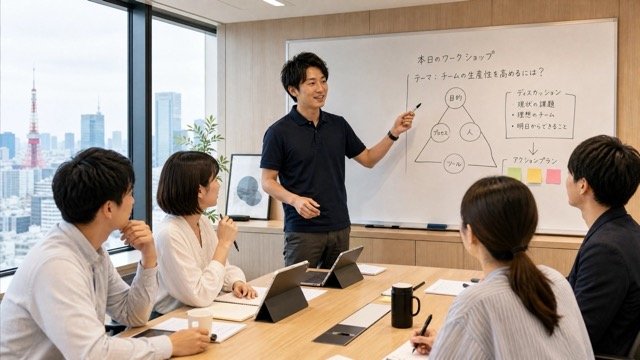
Transform Omotenashi from a philosophy into a measurable service design tool — anticipation metrics, training models, and a field experience staying overnight in an authentic Japanese Ryokan.
5 days
35h
Kyoto
Arabic
In-person
Price $4,200
Details
Nemawashi & Ringi: Consensus Building & Group Decision-Making Management & Leadership Open

Nemawashi & Ringi: Consensus Building & Group Decision-Making

Master the invisible backbone of Japanese corporate decision-making — the Nemawashi consensus-preparation system and the Ringi formal approval process — to eliminate conflict and accelerate high-stakes decisions.

5 days
35h
Tokyo
Arabic
In-person
Price $3,800
Details
Tunnel Engineering in Seismic Environments & Soft Soil Infrastructure & Engineering Open

Tunnel Engineering in Seismic Environments & Soft Soil

Japan unique technologies for tunnelling in soft soil and high-seismic environments — engineering solutions unmatched anywhere else.

5 days
35h
Tokyo
Arabic
In-person
Price $4,000
Details
Looking for a Specialized Japanese Program? Request a Custom Program