
Kaigo: Japanese Elderly Care System & Applications in Gulf Communities
Japan became the world first super-aged society and built the Kaigo system to make ageing dignified, affordable, and community-based. Learn it in Tokyo and adapt it to Gulf communities.
Overview
Program Objectives
- Understand the structure, governance, and financing of Japan's long-term care insurance and Kaigo system.
- Analyse the CCIS model and its coordination of medical, care, prevention, housing, and livelihood services.
- Evaluate clinical, financial, and social outcomes of Kaigo compared to institutional and family-only models.
- Design a CCIS-inspired community care pilot for Gulf societies, adapted to cultural norms and regulatory environments.
Requirements
- Health and social affairs officials, hospital administrators, long-term care investors, public health policy makers, geriatricians, and municipal planners responsible for ageing populations.
Why This Program?
The World Is Ageing. Japan Already Knows How to Care. Learn in Tokyo.
Five days in Tokyo studying the Kaigo system and designing a community care model for your Gulf country.
Gulf countries will face a demographic shift over the next two decades. Building elderly care systems before the crisis is far cheaper and more humane than building them in crisis. Japan offers the only model proven at super-aged scale.
Tokyo is the global laboratory for super-aged society management. It has the highest density of integrated care facilities, the longest-running long-term care insurance programme, and the deepest pool of geriatric expertise.
Five days in Tokyo: Kaigo system overview, nursing home and day-care visits, home-visit nursing demonstration, policy and financing dialogue, Day 5 pilot design presentation.
Program Value
Learning Journey
Nomination Eligibility
Why Train in Japan
Why Train Overseas
Field Visits Note
Certificate Statement
How to Use This File for Nomination
Suggested Programs
 Healthcare & Senior Care Technology
Open
Healthcare & Senior Care Technology
Open
Kaizen in Hospitals: Continuous Improvement in Patient Pathways
Japanese hospitals cut waiting times by 60% and medication errors by 80% using Kaizen. Learn the TPS-based hospital improvement system in Tokyo and launch your own project.
 Trade & Industry
Open
Trade & Industry
Open
Vertical Value Chains: Interlocking Industrial Networks & National Economy Lessons
Study the vertical Keiretsu as a model for building a nationally integrated industry with high local content and resilience to external disruptions — applied lessons for Gulf localisation policies.
 Quality & Operations
Open
Quality & Operations
Open
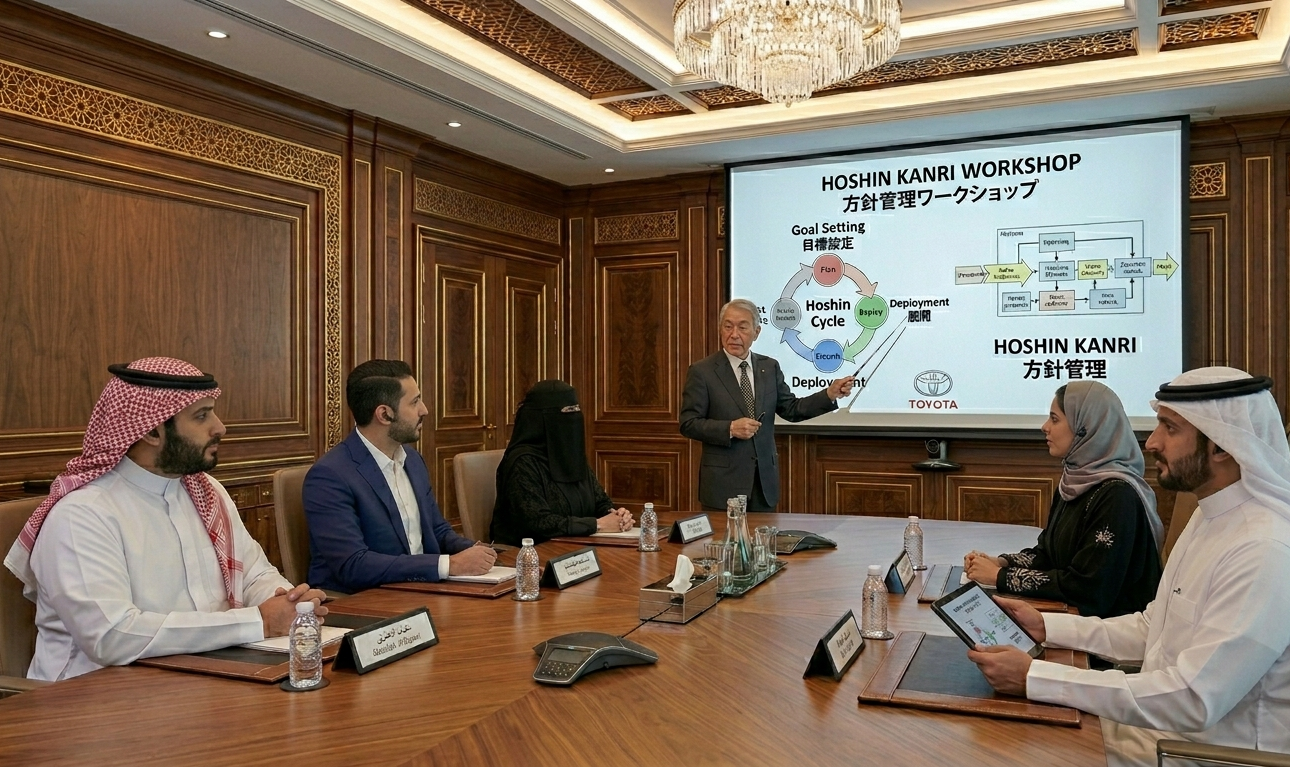
Poka-Yoke: Error-Proofing for Government & Service Sectors
Take Japan's most powerful error-prevention tool beyond the factory floor and apply it to government services, hospitals, airports, and digital workflows — eliminating human error by design, not discipline.
 Quality & Operations
Open
Quality & Operations
Open
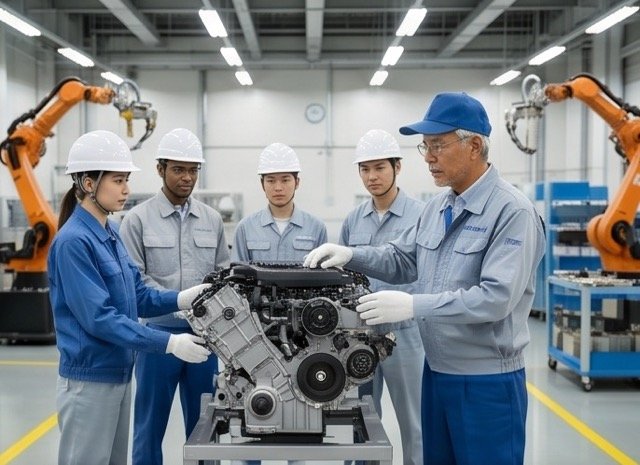
Monozukuri: Craftsmanship Philosophy & Industrial Innovation Strategy
Discover the national philosophy that made Japan the world's undisputed quality benchmark — Monozukuri, the art of making things with precision, pride, and purpose — and translate it into a durable competitive advantage for your organisation.
 Innovation & Technology
Open
Innovation & Technology
Open
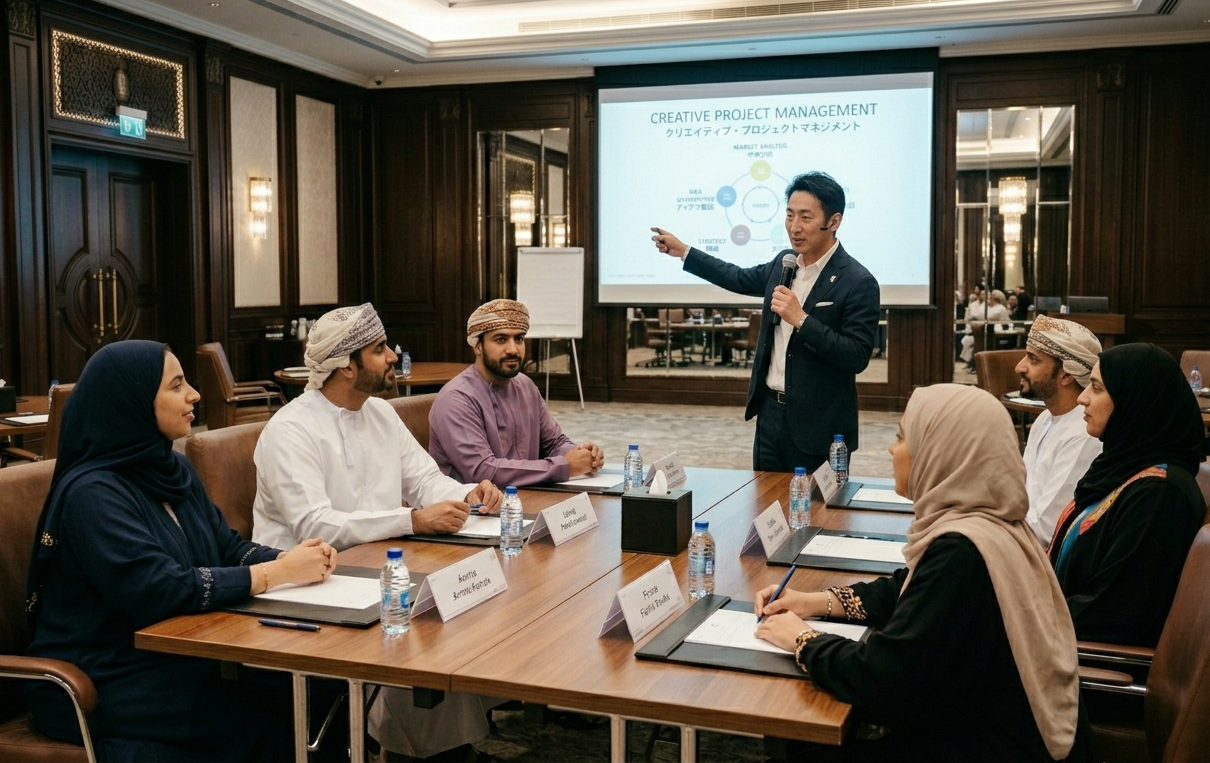
Society 5.0: Japan Vision for a Post-Digital Society
The Japanese Society 5.0 framework placing humans at the centre of technology — a vision that goes beyond digitalisation towards a society solving major civilisational challenges with AI and data.
 Management & Leadership
Open
Management & Leadership
Open
Toyota Way Leadership: The 14 Principles in Practice
A deep immersion in the 14 principles of the Toyota Way — long-term thinking, employee and supplier development, and Genchi Genbutsu — experienced directly at Toyota City headquarters.